A grassroots story from Ganderbal, Jammu & Kashmir
In the valleys of Kashmir, where villages are spread across mountains and access to services can sometimes depend on distance, awareness and the ability to navigate paperwork, a simple idea is making a meaningful difference: take the support to the family instead of waiting for the family to find it.
That is the work being carried out by HITARTH Sahayaks in Ganderbal district. As part of Voice of Specially Abled People (VOSAP)’s Project HITARTH, these community-based facilitators help families of persons with intellectual and developmental disabilities understand and access healthcare benefits available through the NIRAMAYA Health Insurance Scheme.
“When a system is difficult to navigate, a Sahayak becomes the bridge between a family’s need and the benefit that is meant for them.”
From policy to the doorstep
Project HITARTH—Healthcare Initiative To Avail Rehabilitative Therapies and Health Coverage—was created to address a critical last-mile gap in the implementation of NIRAMAYA. The scheme can provide eligible persons with disabilities with up to ₹1 lakh a year in health-related reimbursements for covered services and expenses. Yet a benefit on paper does not automatically become a benefit in a family’s life. Registration, renewals, documentation and reimbursement claims can be difficult to understand and complete.
HITARTH Sahayaks are trained community facilitators who help close that gap. They support families with registration, renewals, documentation and claims, and help track the process until the family receives the benefit. Their role is not simply administrative—it is about making a complex process understandable, accessible and less intimidating.
Walking the last mile in Ganderbal
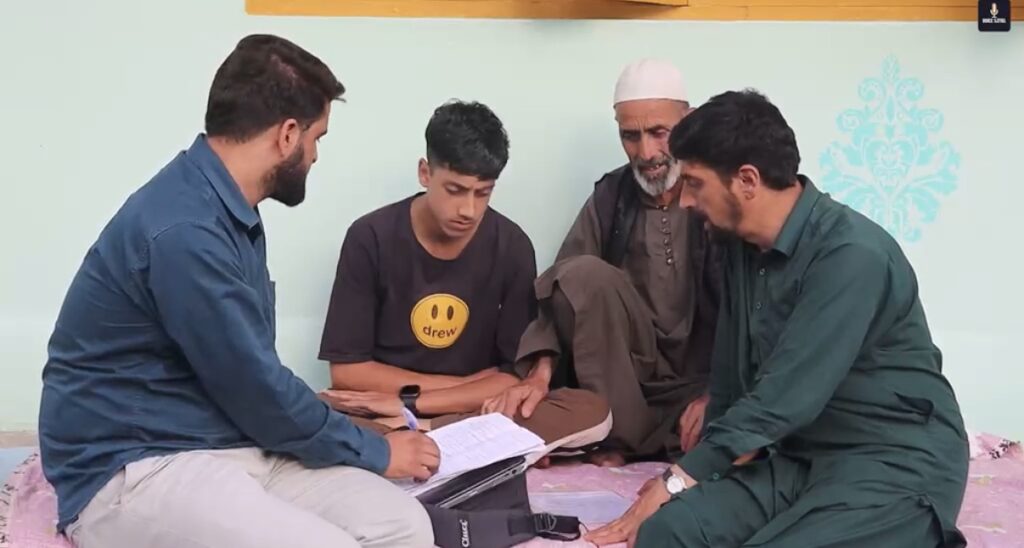
The HITARTH story in Kashmir is rooted in the communities of Ganderbal district. Mission empowered by Sahayaks travelling through rural landscapes and visiting families in their homes.
The work is personal and practical. A Sahayak sits with a beneficiary or family member, listens to their needs, helps them understand what is required, and assists with the use of digital tools and documentation. A phone can become an important link in this process—helping with communication, information and the submission or follow-up of claims.
Helping persons with IDD access therapies and medical support that can directly affect their quality of life. In a region where reaching a service may itself require time and effort, having a trusted person who understands the process can make a substantial difference.
More than paperwork: restoring access
One of the strongest messages from the Kashmir story is that impact is created through persistence. A claim is not merely a form or an entry in a system. Behind every claim is a person who may need physiotherapy, speech therapy, dental care, outpatient treatment or another covered medical service.
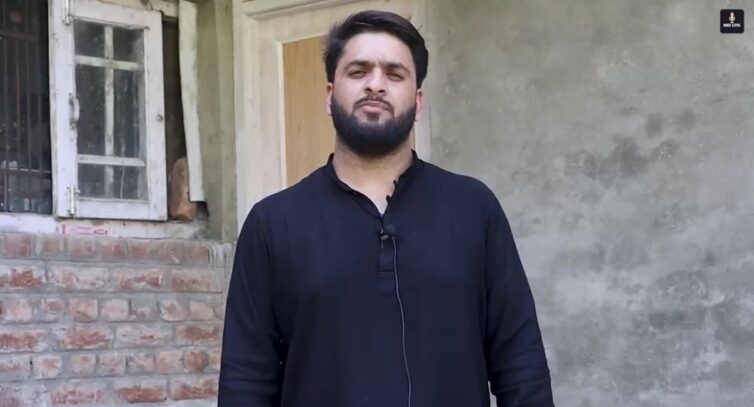
Aquib, one of the sahayaks in kashmir has processed more than 200 claims, reflecting the scale of the effort being undertaken on the ground. Each claim represents a family that has been supported in navigating a process that might otherwise have remained out of reach.
This is what makes the Sahayak model powerful: it combines the reach of a government-backed health scheme with the human connection of a local facilitator. Technology helps move information and documents, but trust, patience and local presence help families complete the journey.
A bridge built on trust
The Sahayaks in Kashmir are more than people who know a process. They are neighbours, community members and familiar faces who are willing to step into homes, sit with families and stay with a problem until there is a way forward.
For families of persons with intellectual and developmental disabilities, this kind of support can reduce one of the most frustrating barriers to healthcare: not knowing where to begin, what to submit, or whom to approach next.
By bringing information and assistance closer to the community, HITARTH helps transform awareness into action. The goal is simple: an eligible family should not miss out on healthcare support because of a lack of awareness, documentation, digital access or procedural guidance.
From Kashmir, a message for India
The story unfolding in Ganderbal is a reminder that inclusion is often built one family at a time. Policies and schemes create the possibility of support; people on the ground make that possibility real.
The project is not just impacting lives of persons with IDD but the HITARTH Sahayaks Themselves are able to earn a living.
Through Project HITARTH, VOSAP and its partner PARIVAAR-NCPO are building a network of Sahayaks who can take this approach to communities across India. The journey in Kashmir shows what happens when the last mile is treated not as an obstacle, but as an opportunity to serve.
Every family supported is a step closer to making healthcare access a reality—not just a promise.